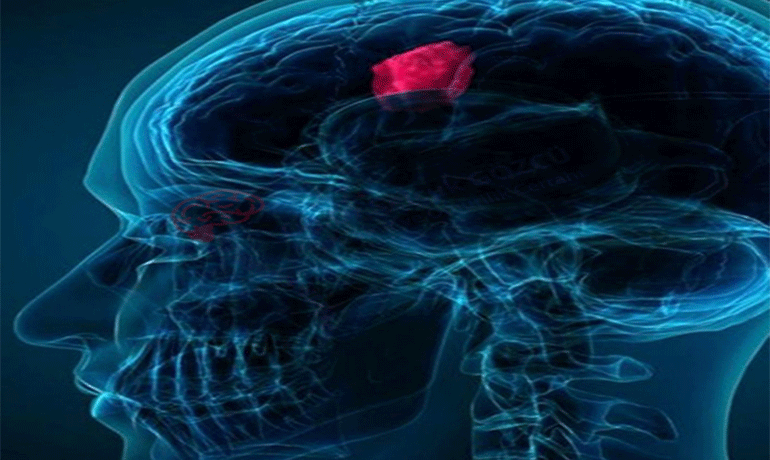
Brain tumors are divided into two: primary and secondary. Primary brain tumors, which consist of the brain’s own cells, can be benign or malignant. Secondary brain tumors occur when cancerous cells that appear elsewhere in the body spread to the brain.
Benign brain tumors: Benign brain tumors do not originate from brain cells. Benign brain tumors, which have a very slow growth rate, can be easily separated from brain tissue. Thus, all or almost all of the benign tumors can be removed. Postoperative results are very good. Benign brain tumors removed through surgical intervention rarely reoccur and are unlikely to spread to other parts of the body. Even though it is not cancerous, when a benign brain tumor reaches a certain size, it can cause serious health problems by putting pressure on sensitive areas of the brain. There may be a risk of a benign brain tumor turning into a cancerous brain tumor over time.
Malignant brain tumors: Malignant brain tumors formed by brain cancer cells grow faster than benign tumors and can damage nearby brain tissue. For this reason, it is very difficult to remove them completely by surgery. Because in malignant brain tumors, the tumorized tissue is the tissue that performs brain functions, and any tissue removed surgically means loss of function. In malignant brain tumors, tumor regrowth may occur after surgery. At the same time, metastatic tumors that spread to the brain tissue from a different part of our body are also considered malignant tumors. Glioblastoma multiforme (gbm), also known as glioblastoma, is known as a grade IV astrocytoma. It is among the lethal and aggressive tumors. Glioblastoma multiforme (gbm) is a rare disease with a rate of 2-3 per 100 thousand. Glioblastoma multiforme (GBM) is known as the most common brain cancer and the most difficult to treat. Glioblastoma multiforme (gbm) may present with symptoms such as headache, memory loss and behavioral changes. At the same time, glioblastoma multiforme (gbm) treatment methods include chemotherapy, radiotherapy and surgery.